Pizza Dough Hydration: Choose the Right Percentage
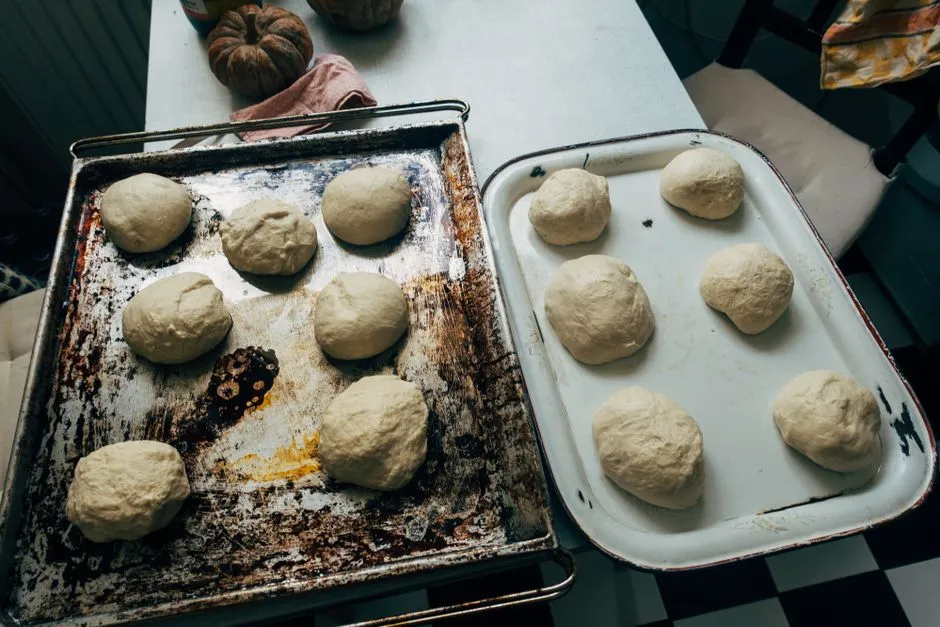
Pizza dough hydration is water divided by flour
Pizza dough hydration is the weight of water expressed as a percentage of the flour weight. A dough made with 1,000 grams of flour and 620 grams of water is 62% hydration: 620 ÷ 1,000 × 100 = 62. Flour is always 100% in baker's percentages, so the same formula scales cleanly to any batch.
For very hot wood-fired pizza, 60% to 65% is a practical working range. Lower hydration is easier to shape and launch; higher hydration can produce a lighter, more open rim but demands stronger flour, better handling and careful floor heat. The best number is the one that fits your flour, fermentation, oven and current skill—not the largest percentage displayed in a forum signature.
Hydration chart for a 1,000-gram flour batch
| Hydration | Water | General handling | Likely fit |
|---|---|---|---|
| 55% | 550 g | Firm, resistant, easy to move | Thin crisp styles, some lower-protein flours |
| 58% | 580 g | Manageable and relatively dry | Beginners, warm rooms, difficult launches |
| 60% | 600 g | Supple without much stickiness | Reliable wood-fired starting point |
| 62% | 620 g | Soft and extensible | Neapolitan-style home formulas |
| 65% | 650 g | Looser, stickier, more delicate | Strong flour and confident handling |
| 70% | 700 g | Very soft; structure and technique matter greatly | Longer-baked or specialised styles |
These are not quality grades. A well-fermented 60% dough can be lighter and better than a poorly managed 70% dough. Water creates opportunity; it does not complete the paperwork.
How to calculate hydration
Use this formula:
hydration % = water weight ÷ flour weight × 100
Only flour and water belong in the basic calculation. Do not divide water by total dough weight.
Example 1: find the hydration
- Flour: 750 g
- Water: 465 g
- Calculation: 465 ÷ 750 × 100
- Hydration: 62%
Example 2: find the water weight
If you have 800 g of flour and want 65% hydration:
- 800 × 0.65 = 520
- Water needed: 520 g
Example 3: scale a complete dough by total weight
Suppose you want four 260 g dough balls, or 1,040 g total dough, using:
- flour: 100%
- water: 62%
- salt: 2.8%
- instant dry yeast: 0.1%
The total formula is 164.9%. Divide the desired dough weight by 1.649:
- Flour: 1,040 ÷ 1.649 = 630.7 g, rounded to 631 g
- Water: 631 × 0.62 = 391.2 g, rounded to 391 g
- Salt: 631 × 0.028 = 17.7 g, rounded to 18 g
- Yeast: 631 × 0.001 = 0.631 g, rounded to 0.6 g
The rounded ingredients total 1,040.6 g. Dividing into four gives about 260.2 g per ball, close enough that the bench will keep functioning.
What more water changes
Water affects the dough at every stage.
Mixing and gluten development
At lower hydration, the dough feels firm and the gluten network develops in an obvious, tight mass. As hydration rises, the dough becomes looser and can seem weak early in mixing. Rest and folds often work better than adding flour until the original percentage has quietly disappeared.
Flour strength matters. A flour that handles 62% comfortably may become slack at 68%, while a stronger pizza or bread flour may remain structured. Absorption also varies between brands, milling styles and batches. The printed protein percentage offers a clue, not a complete prediction.
Fermentation
Softer dough can ferment actively and display bubbles clearly, but hydration is only one control. Yeast quantity, dough temperature, salt and time still decide whether a schedule works. Raising water while copying the same warm, long ferment can produce dough that spreads before baking.
Our cold-fermentation guide explains how time and temperature change the schedule. Change one major variable at a time if you want to learn what caused the result.
Stretching and launch
Higher-hydration dough is usually easier to extend but easier to puncture, stick or distort. It needs a gentle opening, a properly floured bench and a quick build on the peel. Lower hydration buys handling time and a cleaner launch, though very dry dough can fight stretching and bake with a tighter rim.
Oven spring and crumb
Water becomes steam in the oven and contributes to expansion. More water can support a more open crumb when fermentation, gluten and heat are balanced. It can also leave a pale or gummy centre when the pizza is overloaded or the bake is too cool and brief for the dough style.
Hydration never works alone. A 90-second bake and a six-minute bake ask different things from the same water.
Match hydration to the oven
750–900°F / 400–480°C wood-fired oven
Start around 60% to 63%. The short bake preserves moisture, so the dough does not need extreme hydration to stay tender. A 62% formula offers a useful balance of puff and control; our Neapolitan-style dough recipe uses exactly 620 g water per 1,000 g flour.
650–750°F / 345–400°C pizza oven
Roughly 62% to 65% can help the crust remain tender through a longer bake. The correct number depends on flour and pizza thickness. Reduce wet toppings before increasing dough water to solve a soft centre.
475–550°F / 245–290°C home oven
Longer bake times can dry a lean crust. Hydration in the mid-60s or higher may help for appropriate styles, often alongside oil. That becomes a different dough design rather than a hotter-oven formula with one number changed.
These ranges are starting points, not claims that every oven or flour behaves identically. Measure the baking surface with an infrared thermometer rated for the range and judge the baked result.
When to lower hydration
Drop the water by two or three percentage points when:
- the dough repeatedly spreads into flat puddles during proofing;
- shaping produces holes before the centre is thin enough;
- launches stick despite a sound peel routine;
- the flour cannot hold structure through the ferment;
- a hot, humid kitchen makes the dough difficult to control;
- you are learning a new oven and want fewer variables.
Reducing a 1,000 g flour batch from 65% to 62% means removing 30 g water: 650 g minus 620 g. That small difference is easy to feel.
When to raise hydration
Add one or two percentage points when:
- the dough remains tight after full proofing;
- the baked rim is consistently dense despite sound fermentation;
- the flour absorbs water easily and the current dough feels dry;
- a longer, cooler bake dries the crust;
- handling at the present level is completely controlled.
For a 500 g flour batch, each percentage point equals 5 g water. Move from 60% to 62% by adding 10 g, not an unmeasured splash.
Troubleshooting by symptom
Sticky from the first minute: do not immediately add flour. Mix until no dry patches remain, cover for 15 to 20 minutes, then reassess. Rest changes the feel as flour hydrates.
Strong after mixing, slack after proofing: hydration may be fine; fermentation may be too warm or long. Shorten the schedule or reduce yeast before redesigning the formula.
Tears while stretching: the dough may be underproofed, cold, poorly developed or dried on the surface. More water is not the automatic fix.
Base burns before the top cooks: correct the floor-to-dome heat balance and topping load. Lower hydration alone will not repair an overheated floor.
Centre stays wet: use less sauce or cheese, drain toppings, stretch evenly and confirm floor temperature. Distinguish topping moisture from raw dough.
Keep useful notes
Record flour brand, hydration, salt, yeast, dough temperature, room temperature, fermentation time, ball weight, floor temperature and bake time. Then write one sentence about handling and one about the crust.
Change only one or two variables in the next batch. If you alter hydration, flour, yeast, fermentation and oven temperature together, the result may be wonderful but it will not teach you which decision worked.
Browse our dough and fermentation guides for formulas that keep the arithmetic visible. The practical goal is not maximum hydration. It is a dough you can ferment, open, launch and bake repeatedly—with enough water to make the crust you want and no extra percentage points hired for prestige.